Ten quiet minutes
with HaShem
Shalom is a daily kavana, a piece of Torah wisdom with its source, and ten minutes of guided hitbodedut — then one honest line of Cheshbon HaNefesh before the day takes over. Small enough to keep on a bad morning, and it keeps the record for you.
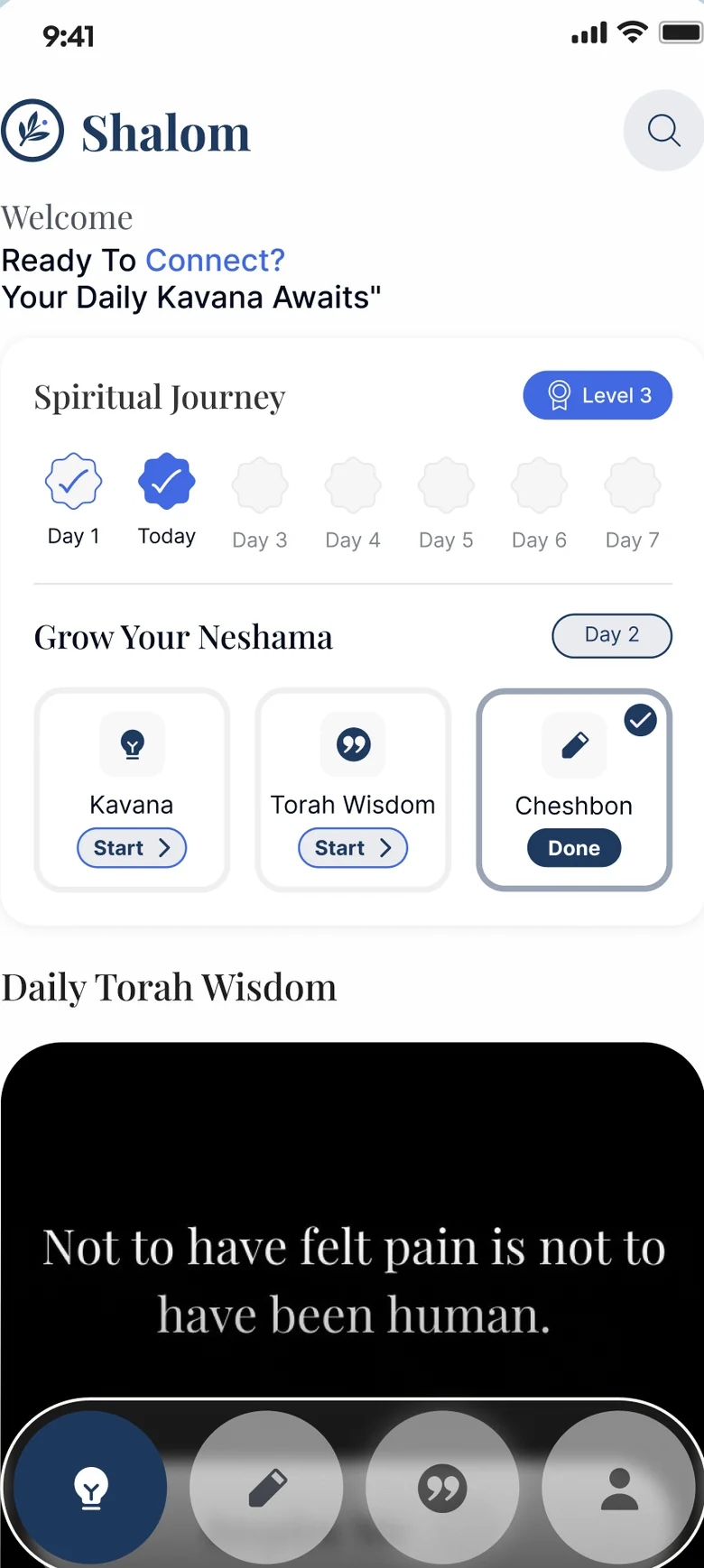
Ten minutes, three small things
Grow Your Neshama is the day’s practice: a kavana, a piece of Torah wisdom, and an honest line of Cheshbon.
Set the kavana
A kavana is the intention you bring to the day. The app gives you one to start on, in Hebrew with the English beside it, so you know what you are saying and not only how it sounds.
Sit with Torah wisdom
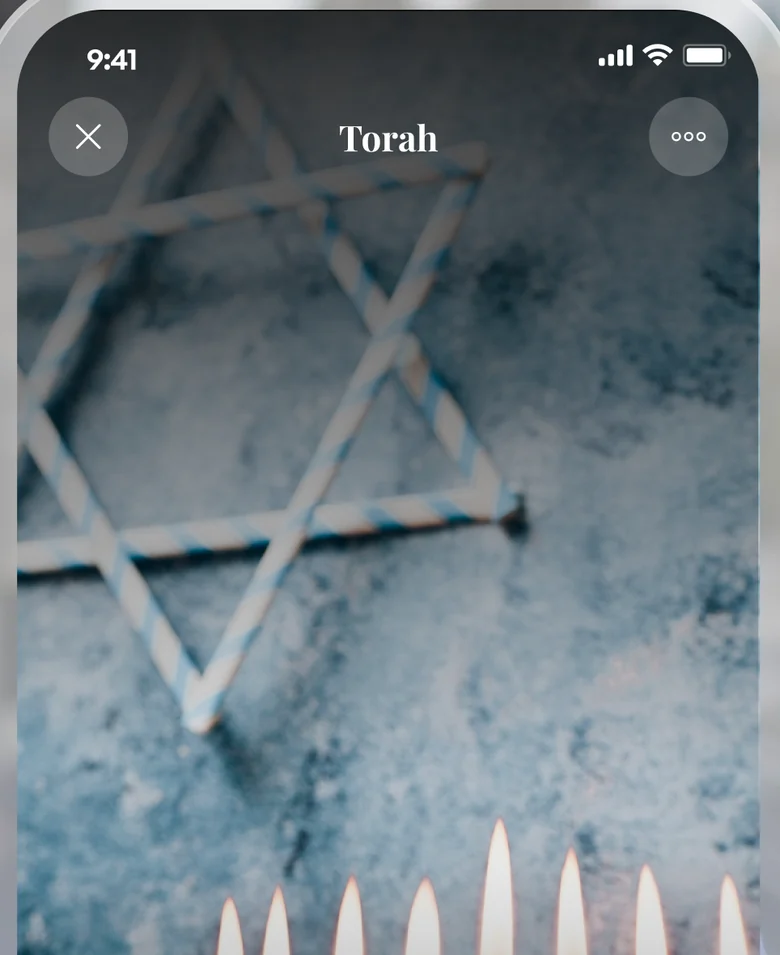
One passage, full-screen, with its source cited so you can always find it again and check it in the text you trust. Keep it, share it, or set it where you will see it.
Make the cheshbon
Cheshbon HaNefesh is an accounting of the soul — a short, private look at your own day. One prompt, one line, and months later a record only you can read.
A practice, not a quote feed
The kavana is the front door. What keeps people in the app is everything built around it.
Guided hitbodedut, screen locked
Hitbodedut is the old practice of setting time aside to speak your own heart, alone. The app guides it with a real player — shuffle, repeat, a scrub bar and skip controls — and it keeps playing with the screen locked.
Hebrew, beside the English
Passages carry the Hebrew alongside the English and cite where they come from — so nothing is said blind, and everything can be checked in the text you trust.
Topics, Themes and Music
Three pickers sit at the top of the card: choose what the day is about, change how the card looks, and set what plays underneath it.
A private Cheshbon HaNefesh
A prompt, a mood, and a line of your own. It is stored under your account and nobody else reads it — which is rather the point of an accounting of the soul.
Mood you can actually see
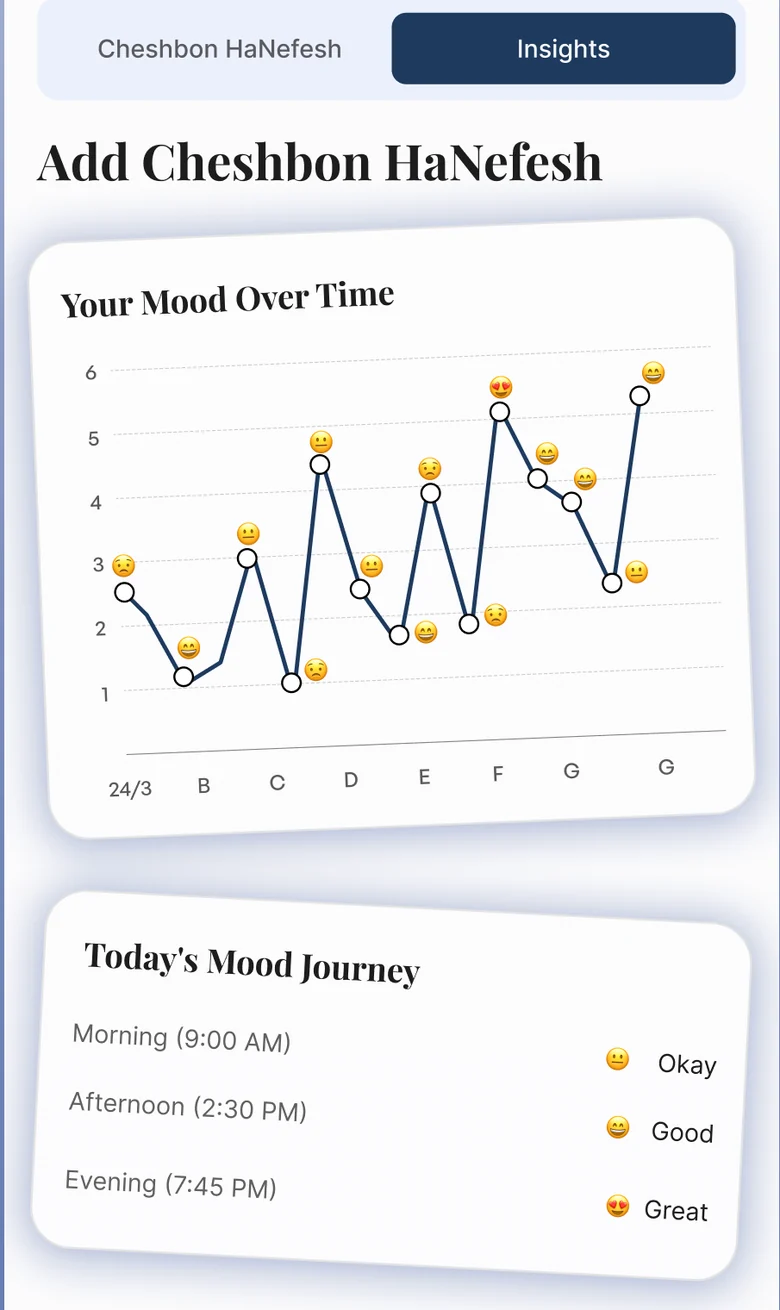
Your Mood Over Time and Today’s Mood Journey, charted from your own entries — so a heavy week reads as a dip rather than a verdict on your practice.
A kavana on your home screen
A widget on the iPhone Lock Screen and Home Screen, and on Android’s home screen — a fresh line a day, without opening the app.
Sound to sit underneath
A browsable audio library behind the practice, including a silent option for the mornings when you want the words bare.
Collections & history
Keep the lines that carried you, group them into collections, and find anything again from a searchable history.
Your cheshbon is nobody else’s business
What you write is stored under your own account so it follows you to a new phone, and that is all it is used for. It is not read for advertising, not used to train anything, and not shared. You can delete the account, and everything in it, from inside the app.
Whatever the morning actually is
The Topics picker is how you say what today is about. These are the nine in the app.
 Neshama & Self-Worth
The soul, and what it is worth.
 Shalom HaNefesh (Peace of Mind)
Quiet in a loud head.
 Shalom Bayit (Peaceful Home)
Peace inside the house.
 Parnassa (Livelihood)
Work, money and provision.
 Shlichut (Mission / Purpose)
What you are here to do.
 Refuah (Healing)
Body and spirit, mending.
 Emunah & Bitachon (Faith & Trust)
Believing, and relying.
 Teshuvah & New Seasons
Returning, and starting again.
 Mussar & Middot (Character)
Working on the traits.
One line, understood
A daf of Gemara before work is a lot to ask. One passage, with the Hebrew beside the English and its source under it, is not — and it is far more likely to still be with you at lunchtime.
-
Always sourced The reference travels with the words, so you can open the sefer and check it yourself.
-
Browse by topic or theme Bitachon, gratitude, strength — or change the whole look of the card from the Themes picker.
-
Sound underneath, or none The Music picker sets what plays behind the practice, including nothing at all when you want the words bare.
-
Keep it or send it Save a line into a collection, share it with someone who needs it, or save the image for your own screen.
An accounting, a line at a time
Cheshbon HaNefesh is an old practice, not a mood tracker borrowed from somewhere else. Shalom just makes it small enough to actually do, and keeps the record — so you can look back honestly rather than relying on how this particular morning happens to feel.
-
A prompt instead of a blank page You are answering a question, not staring at an empty box at 6am.
-
Your Mood Over Time Charted from your own entries, over weeks, so you can see the shape of a season rather than one bad night.
-
Morning, afternoon, evening Today’s entries side by side — the shape of a single day, not just its average.
-
It has its own streak The cheshbon is tracked separately, so the habit builds even on days the rest does not happen.
The reminder already on your screen
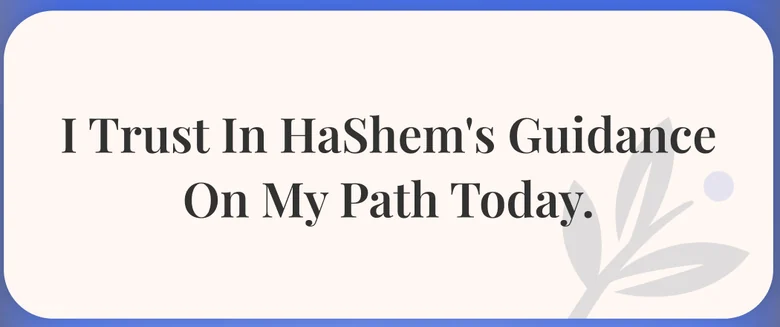
The hardest part of any daily practice is remembering it. A widget removes that step: the line is simply there when you pick up your phone, and one tap opens it in full.
-
Lock Screen and Home Screen Small and medium widgets on the iPhone Home Screen, a rectangular one on the Lock Screen from iOS 16, and a resizable widget on Android.
-
Sourced on the widget too The line carries its source on the widget, not just the words on their own.
-
A new one every day Chosen from the same pool as the app, refreshed once a day, and picked up again if a refresh is missed.
-
Tap through to the source The widget deep-links to that exact line, not just to the app’s home screen.
Straight from inside the app
Real screens: your day, the Torah card, a wisdom card, the journey row, the Cheshbon chart and the widget.

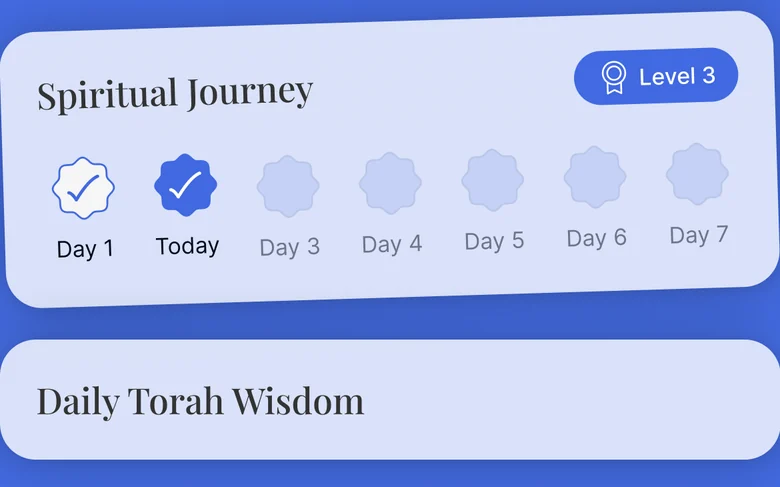
Taken from the Shalom App Store screenshots. The passages, entries and days shown are examples, not a typical account: a new account starts on Day 1 at Level 1 with nothing marked done, and the level shown here is the result of a run of mornings.
What you get with Shalom
Shalom is free to download, and full access comes with a subscription. Where your store offers an introductory offer or a free trial, the purchase screen shows it before you commit.
Start with the appPrice, any introductory offer and renewal terms are set by the App Store or Google Play and are shown on the purchase screen in your region before you buy. A subscription renews automatically unless you cancel before the renewal date, and you can cancel any time from your store subscription settings.
-
The full library Every topic and theme, not a sampler.
-
Guided hitbodedut Ten-minute sessions, with background playback.
-
Cheshbon & mood insights Prompts, private entries and the charts built from them.
-
Collections & history Keep the lines that carried you and find them again.
-
Themes & widgets The full theme gallery, plus Lock Screen and Home Screen widgets.
Questions, answered
The things people ask before they download.
Start with one kavana
Ten quiet minutes tomorrow morning, before the day takes over. Free to download.